


Sorry, this entry is only available in European Spanish.

ITC-AICE se desplaza a Toledo para impulsar LIFE HYPOBRICK, fabricar ladrillos que eliminan la cocción | ITC-AICE travels to Toledo to promote LIFE HYPOBRICK, manufacturing bricks that do not require firing
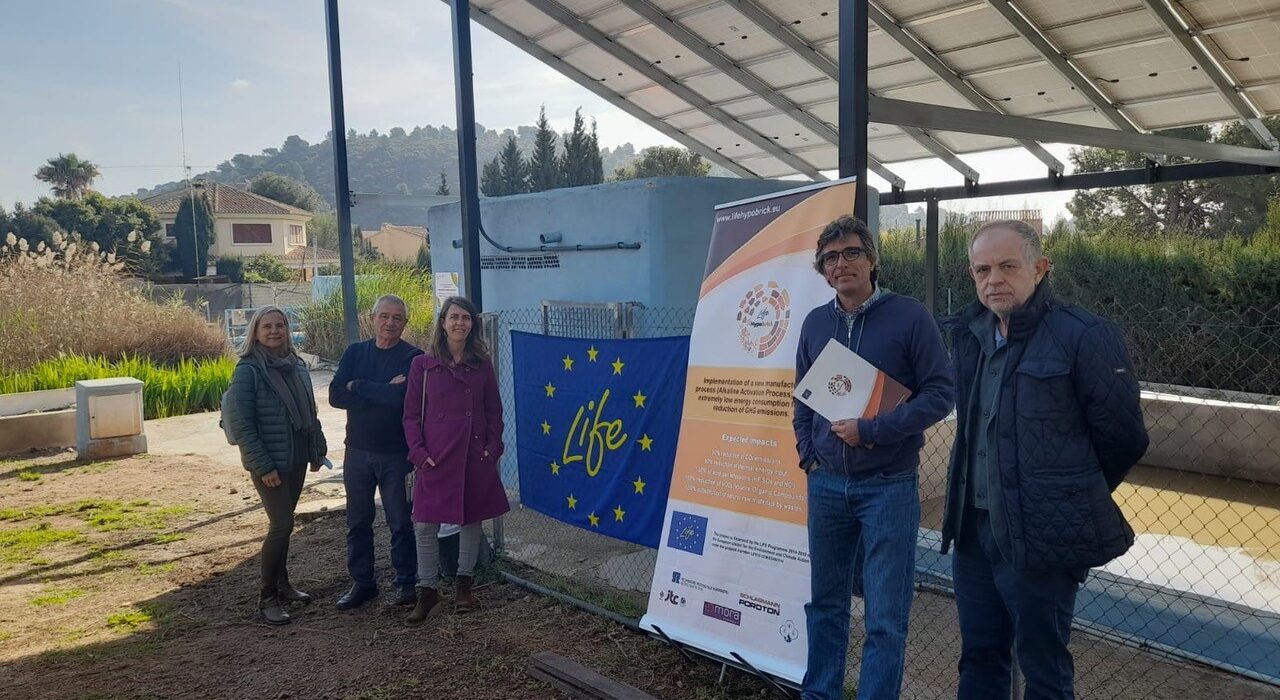
Castellón/Illescas (Toledo), 27-28 de octubre de 2021.- Parte del equipo investigador del Proyecto LIFE HYPOBRICK, coordinado por el Instituto de Tecnología Cerámica (ITC-AICE) junto a varios miembros del consorcio se ha desplazado a Illescas, (Toledo) en donde tiene su sede Cerámicas Mora, reconocida empresa ladrillera participante en el proyecto. El motivo no es otro que la celebración de la 2ª Reunión Anual de LIFE HYPOBRICK, que cuenta con la financiación de la Unión Europea a través del Programa LIFE (Ref.: LIFE 18 CCM/ES/001114).
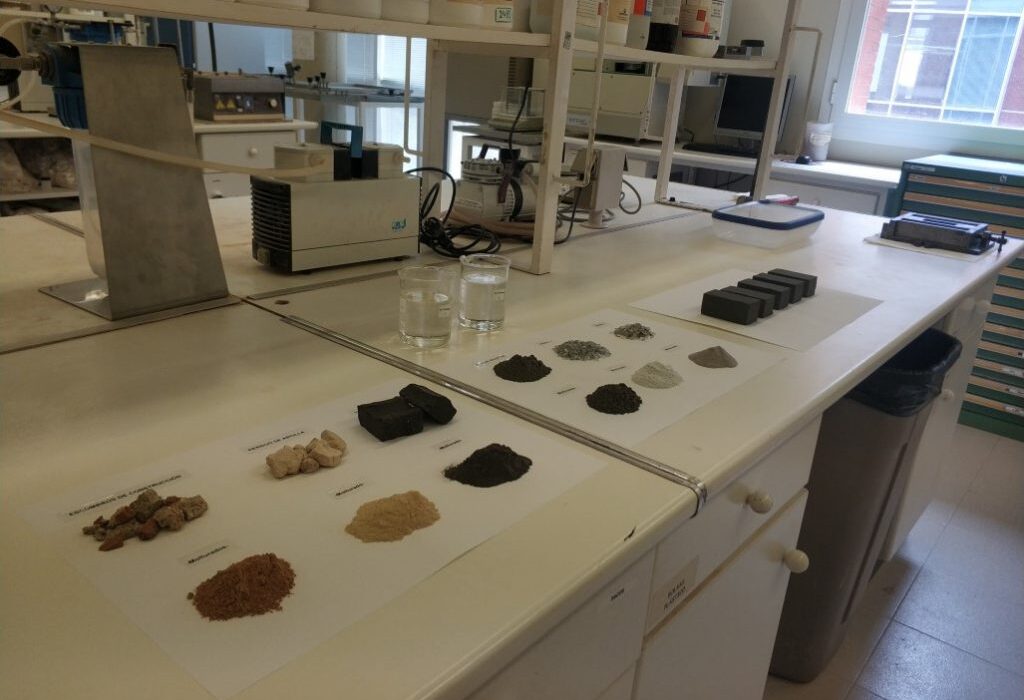
Hoy ha concluido la segunda jornada de la reunión en la que se han abordado los pasos para la obtención de ladrillos para la construcción en los que se han empleado residuos procedentes de otros sectores y en donde se elimina la etapa de cocción, una fase que consume el 90% de la energía del proceso productivo. LIFE HYPOBRICK pretende ayudar a industrias como la ladrillera, que hacen un uso intensivo de energía, a alcanzar los objetivos marcados por la UE en materia de reutilización de residuos, maximización del reciclaje, cambios en las tecnologías del proceso, reducción de consumo energético y emisiones de CO2 y otros compuestos nocivos a la atmósfera. Por eso, se introduce en el proceso la tecnología de la activación alcalina en sustitución de la cocción: un proceso de curado de los ladrillos que se lleva a cabo a muy baja temperatura y sin producir emisiones.

Durante la estancia en Cerámicas Mora, su Director Técnico, Diego García, ha querido poner de manifiesto su compromiso con el medioambiente abordando en sus instalaciones la construcción de un prototipo ad hoc para obtener este tipo de ladrillos sostenibles: “Es algo que llevamos inscrito en nuestra genética como empresa desde los orígenes. El proyecto original de nuestra fábrica, hace ya 50 años, se gestó desde un principio optimizando la utilización de la energía y el aprovechamiento máximo de los recursos naturales. Por eso, utilizamos combustibles limpios y reutilizamos la energía obtenida, con el fin de generar el menor impacto al medio ambiente y disminuir los gases de efecto invernadero, siguiendo en todo momento los protocolos internacionales y la tecnología más vanguardista en el sector (MTD) o Mejores Tecnologías Disponibles. La oportunidad de trabajar en el proyecto LIFE HYPOBRICK nos parece un desafío al que podemos contribuir con nuestra experiencia y conocimiento y que sirva para demostrar que es posible que la industria ladrillera en Europa pueda producir con elevados niveles de calidad y de un modo que impacte lo menos posible en el entorno. Por eso hemos aportado nuestra labor y compromiso, para que LIFE HYPOBRICK se pueda implantar y replicar en lo posible en la industria ladrillera, y que esta cumpla con los objetivos marcados por la Unión Europea en materia de desarrollo sostenible, implantación de la economía circular en las industrias fabricantes de ladrillos, además de eliminar las emisiones a la atmósfera de estos gases y compuestos nocivos”.
La introducción de una novedosa tecnología en el proceso, en lugar de pasar por la cocción, utiliza una solución alcalina en lugar de agua, mientras que también hay un cambio en el conformado del ladrillo, que se lleva a cabo por prensado plástico en lugar de utilizar el tradicional método de extrusión.
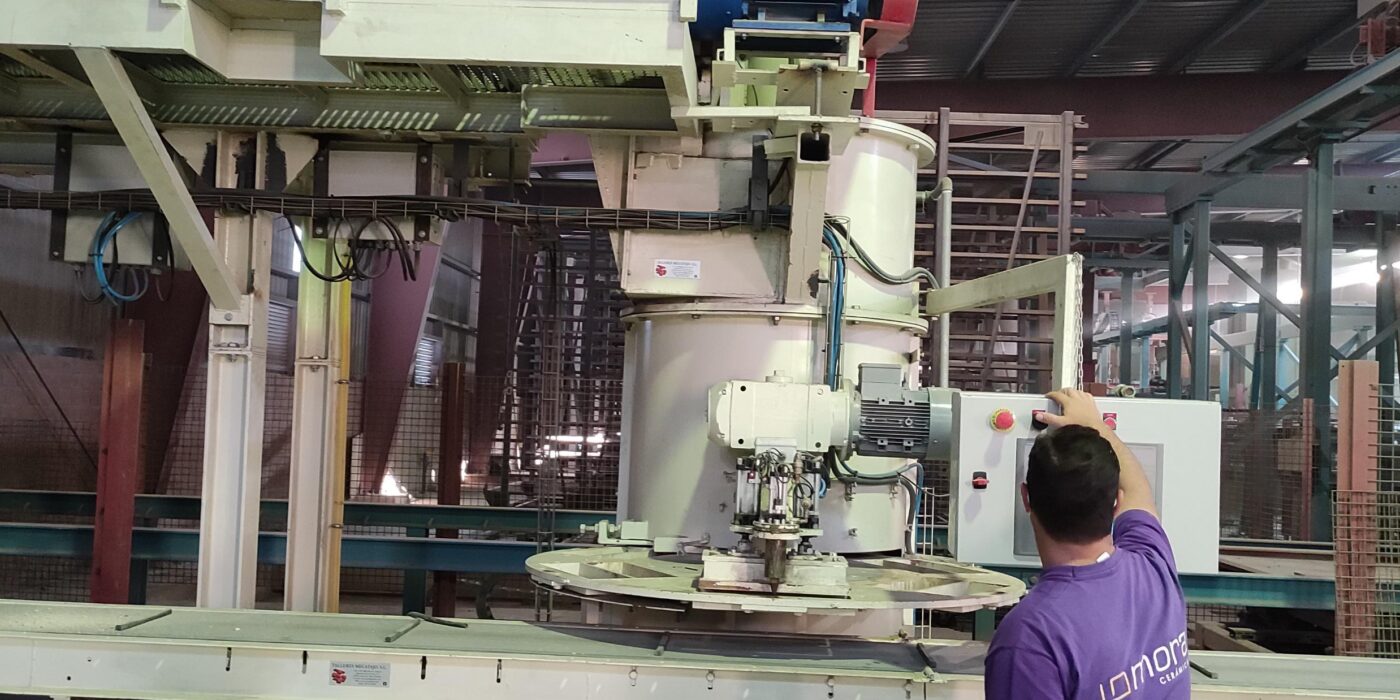
Con motivo de esta 2ª Reunión Anual de LIFE HYPOBRICK, los participantes han podido ver in situ el dispositivo y trazar la planificación para poder llevar a cabo pruebas a escala industrial.
Más información sobre LIFE HYPOBRICK:
Castellón/Illescas (Toledo), 27-28 October 2021 – Part of the research team of the LIFE HYPOBRICK Project, coordinated by the Institute of Ceramic Technology (ITC-AICE) together with several members of the consortium have travelled to Illescas (Toledo) where Cerámicas Mora, a well-known brick company participating in the project, is located. The reason is none other than the celebration of the 2nd Annual Meeting of LIFE HYPOBRICK, which is funded by the European Union through the LIFE Programme (Ref.: LIFE 18 CCM/ES/001114).
The second day of the meeting concluded today, during which the steps for obtaining bricks for construction using waste from other sectors and eliminating the firing stage, a phase that consumes 90% of the energy in the production process, were discussed. LIFE HYPOBRICK aims to help energy-intensive industries such as the brick industry to meet EU targets for reusing waste, maximising recycling, changing process technologies, reducing energy consumption and reducing emissions of CO2 and other harmful compounds into the atmosphere. Therefore, alkaline activation technology is introduced in the process to replace firing: a curing process of the bricks that is carried out at a very low temperature and without producing emissions.
During his stay at Cerámicas Mora, its Technical Director, Diego García, wanted to highlight its commitment to the environment by building an ad hoc prototype at its facilities to obtain this type of sustainable bricks: “This is something that has been part of our company’s genetic make-up since the very beginning. The original project for our factory, 50 years ago now, was conceived from the beginning with a view to optimising the use of energy and making the best possible use of natural resources. Therefore, we use clean fuels and reuse the energy obtained, in order to generate the least impact on the environment and reduce greenhouse gases, following at all times the international protocols and the most cutting-edge technology in the sector (BAT) or Best Available Technologies. The opportunity to work on the LIFE HYPOBRICK project seems to us to be a challenge to which we can contribute with our experience and knowledge and which will serve to demonstrate that it is possible for the brick industry in Europe to produce with high levels of quality and in a way that has the least possible impact on the environment. That is why we have contributed our work and commitment, so that LIFE HYPOBRICK can be implemented and replicated as far as possible in the brick industry, and so that it meets the objectives set by the European Union in terms of sustainable development, implementation of the circular economy in brick manufacturing industries, as well as eliminating emissions of these harmful gases and compounds into the atmosphere”.
The introduction of a innovative technology in the process, instead of firing, uses an alkaline solution instead of water, while there is also a change in the forming of the brick, which is carried out by plastic pressing instead of using the traditional extrusion method.
On the occasion of this 2nd LIFE HYPOBRICK Annual Meeting, participants were able to see the device in situ and to plan for industrial-scale trials.
More information about LIFE HYPOBRICK:


LIFE HYPOBRICK SIGUE DIFUNDIENDO SUS AVANCES-Podcast “Innovación al día” de REDIT | LIFE HYPOBRICK CONTINUES TO DISSEMINATE ITS ADVANCES-REDIT “Innovation Update” Podcast
El proyecto LIFE HYPOBRICK sigue difundiendo sus avances, esta vez con la participación de la investigadora principal del proyecto en el ITC, Mónica Vicent, que participó el pasado 15/06/2021 en el Podcast “Innovación al Día”, un nuevo canal creado por la Red de Institutos Tecnológicos de la Comunidad Valenciana (REDIT) con el propósito de dar a conocer la vanguardia de la investigación e innovación. La Red, integrada por 11 institutos tecnológicos que trabajan para diferentes sectores productivos como el metal, calzado, mueble, embalaje, informática, energía, cerámica, claves en este territorio, tiene un alcance de más de 150.000 profesionales, 12.400 empresas cliente, 5.270 empresas asociadas y más de 1.000 proyectos de I+d+i.
Este Podcast dedicado a LIFE HYPOBRICK es el episodio nº 3 del nuevo canal de difusión.
PLATAFORMAS
- SPOTIFY: https://open.spotify.com/
show/1xj1gSpuBbNAE1k4dE2vrY - SPREAKER: https://www.spreaker.com/
show/4952445/episodes/feed - IVOOX: https://www.ivoox.com/audios-
innovacion-al-dia_s0_ f21071572_p2_1.html?o=all - PODCHASER: https://www.podchaser.com/
podcasts/innovacion-al-dia- 1905750 - PODCAST ADICT:https://podcastaddict.com/
podcast/3371563
- DEEZER: https://www.deezer.com/show/
2695152
REDES SOCIALES:
- Twitter:
➡️¿Quieres descubrir cómo se fabrican ladrillos🧱 sin apenas emitir gases contaminantes?♻️Descúbrelo en la tercera entrega del #Podcast_Innovaciónaldía de la mano de Monica Vicent, Investigadora del @ITC_ceramica
📻https://t.co/50vnVm1rg4
Con el apoyo de @GVAivace
#SomosREDIT pic.twitter.com/PtAKLO6u3W— Redit (@Redit_es) June 15, 2021
- LINKEDIN: https://www.linkedin.com/feed/update/urn:li:activity:6810476383077232640
- FACEBOOK: https://www.facebook.com/Redit.es/posts/4147296012006382
The LIFE HYPOBRICK project continues to disseminate its advances, on this occasion with the participation of the project’s main researcher at ITC, Mónica Vicent, who took part on 15/06/2021 in the Podcast “Innovación al Día”, a new channel created by the Network of Technological Institutes of the Valencian Community (REDIT) with the aim of disseminating the cutting edge of research and innovation. The Network, composed of 11 technology institutes working for different productive sectors such as metal, footwear, furniture, packaging, ICT, energy, ceramics, key in this territory, has a reach of more than 150,000 professionals, 12,400 client companies, 5,270 associated companies and more than 1,000 R+D+i projects.
This Podcast dedicated to LIFE HYPOBRICK is the 3rd episode of the new broadcasting channel.
PLATFORMS
- SPOTIFY: https://open.spotify.com/
show/1xj1gSpuBbNAE1k4dE2vr - SPREAKER: https://www.spreaker.com/
show/4952445/episodes/feed - IVOOX: https://www.ivoox.com/audios-
innovacion-al-dia_s0_ f21071572_p2_1.html?o=all - PODCHASER: https://www.podchaser.com/
podcasts/innovacion-al-dia- 1905750 - PODCAST ADICT:https://podcastaddict.com/
podcast/3371563
- DEEZER: https://www.deezer.com/show/
2695152
SOCIAL MEDIA:
- Twitter:
➡️¿Quieres descubrir cómo se fabrican ladrillos🧱 sin apenas emitir gases contaminantes?♻️Descúbrelo en la tercera entrega del #Podcast_Innovaciónaldía de la mano de Monica Vicent, Investigadora del @ITC_ceramica
📻https://t.co/50vnVm1rg4
Con el apoyo de @GVAivace
#SomosREDIT pic.twitter.com/PtAKLO6u3W— Redit (@Redit_es) June 15, 2021
- LINKEDIN: https://www.linkedin.com/feed/update/urn:li:activity:6810476383077232640
- FACEBOOK: https://www.facebook.com/Redit.es/posts/4147296012006382
LIFE HYPOBRICK, liderado por ITC-AICE, implanta un prototipo industrial para obtener ladrillos sostenibles | LIFE HYPOBRICK, led by ITC-AICE, implements an industrial prototype for sustainable bricks
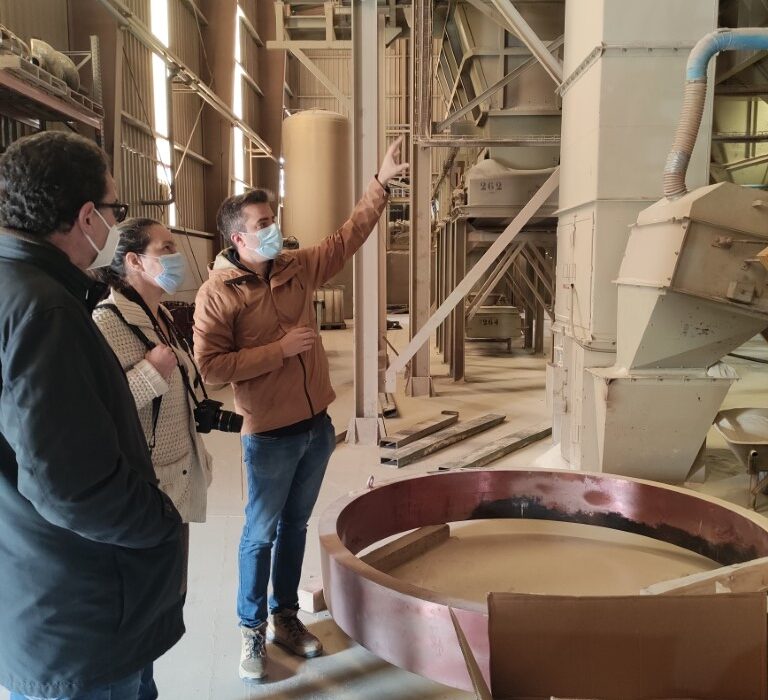
Castellón, 25 de mayo de 2021.- La empresa fabricante de ladrillos Cerámicas Mora, ubicada en Toledo y miembro del grupo de trabajo del Proyecto LIFE HYPOBRICK, liderado por el Instituto de Tecnología Cerámica (ITC-AICE), aborda en sus instalaciones la implantación de un prototipo industrial en el que se llevarán a cabo las pruebas piloto cuyo objetivo es obtener ladrillos fabricados a partir de distintos tipos de residuos eliminando el tradicional proceso de cocción, y sustituyéndolo por la novedosa tecnología de activación alcalina, por la que los ladrillos se someten a un proceso de curado a muy baja temperatura.
LIFE HYPOBRICK, financiado por el Programa LIFE (LIFE 18/CCM/ES/001114) con el apoyo del Instituto Valenciano de Competitividad Empresarial (IVACE) de la Generalitat Valenciana, contó con la empresa Cerámicas Mora por ser una de las fábricas de ladrillos más modernas de Europa. Consta de dos líneas de producción para fabricar ladrillos gresificados (clinker) a elevada temperatura.
Según Mónica Vicent, investigadora principal de LIFE HYPOBRICK en ITC-AICE: “algunas de las etapas del nuevo proceso son bastante similares al proceso cerámico existente, pero otras son diferentes, y por eso Cerámicas MORA ha implementado un prototipo para conformar los nuevos ladrillos. Las principales diferencias entre los dos procesos son, por ejemplo, el uso de una solución alcalina para la preparación del ladrillo en lugar de agua, y que toda la maquinaria que esté en contacto con la nueva materia prima debe ser resistente a un pH elevado (tolvas, cintas transportadoras, mezcladoras, etc.), existiendo un cambio en la conformación del ladrillo que suele hacerse por extrusión, y esta vez se llevará a cabo con otra técnica”.
Por estas razones, según la investigadora, ha sido esencial desarrollar un prototipo industrial diferente a la hora de dar forma a los nuevos ladrillos, ya que tiene que estar basado en el proceso de activación alcalina y conformado por prensado plástico.
El prototipo está ya desarrollado en las instalaciones de Cerámicas Mora, y según explican, no ha sido fácil precisamente, dadas las condiciones impuestas por la pandemia, pero también las condiciones climatológicas que supuso el paso de “Filomena” por esa área geográfica, que retrasó su instalación y puesta a punto.
¿Cómo es el prototipo industrial de LIFE HYPOBRICK?
El prototipo de LIFE HYPOBRICK consta de una tolva que recibe la composición de los nuevos ladrillos procedente de una mezcladora. Por la parte inferior de esta tolva pasa una cinta en movimiento que transporta moldes, y además una espátula los llena completamente al tiempo que alisa la superficie de los ladrillos, que serán extraídos mediante un proceso hidráulico. Una vez extraído el ladrillo del molde, se coloca en la línea de producción actual hasta llegar a la etapa de curado, creando diferentes curvas para alcanzar la temperatura y la humedad que se hayan fijado en el laboratorio.

Más información sobre LIFE HYPOBRICK:
LIFE HYPOBRICK, led by ITC-AICE, implements an industrial prototype for sustainable bricks
Castellón, 25 may 2021.- The brick manufacturer Cerámicas Mora, located in Toledo and member of the working group of the LIFE HYPOBRICK project, led by the Institute of Ceramic Technology, (Instituto de Tecnología Cerámica ITC-AICE) is undertaking the implementation of an industrial prototype in its facilities where pilot tests will be carried out with the aim of obtaining bricks made from different types of waste by eliminating the traditional firing process and replacing it with the innovative technology of alkaline activation, by which the bricks are subjected to a curing process at very low temperature.
LIFE HYPOBRICK, financed by the LIFE Programme (LIFE18 CCM/ES/001114) included the company Cerámicas Mora as one of the most modern brick factories in Europe. It is equipped with two production lines for the production of high-temperature clinker bricks.
According to Mónica Vicent, principal researcher of LIFE HYPOBRICK at ITC: “Some of the stages of the new process are quite similar to the existing ceramic process, but others are different, and that is why Cerámicas MORA has implemented a prototype to produce the new bricks. The main differences between the two processes are, for example, the use of an alkaline solution for the preparation of the brick instead of water, and that all the machinery in contact with the new compositions must be resistant to high pH (hoppers, conveyor belts, mixers, etc.), there is a change in the moulding of the brick that is usually done by extrusion, and this time it will be carried out with another technique”.
For these reasons, according to the researcher, it has been essential to develop a different industrial prototype when shaping the new bricks, as it has to be based on the process of alkaline activation and moulded by plastic pressing.
The prototype has already been developed at the Cerámicas Mora facilities, and according to the researcher, it has not been easy, given the conditions imposed by the pandemic, but also the weather conditions caused by the storm “Filomena” that passed through the geographical area, which delayed its installation and fine-tuning.
How is the LIFE HYPOBRICK industrial prototype?
The LIFE HYPOBRICK prototype consists of a hopper that receives the composition of the new bricks from a mixer. A moving belt passes through the bottom of this hopper carrying moulds, and a spatula fills the moulds completely while smoothing the surface of the bricks, which will be extracted by a hydraulic process. Once the brick has been extracted from the mould, it is placed on the actual production line until it reaches the curing stage, creating different curves to reach the temperature and humidity set in the laboratory.
More information about LIFE HYPOBRICK: